
 10-10-2026
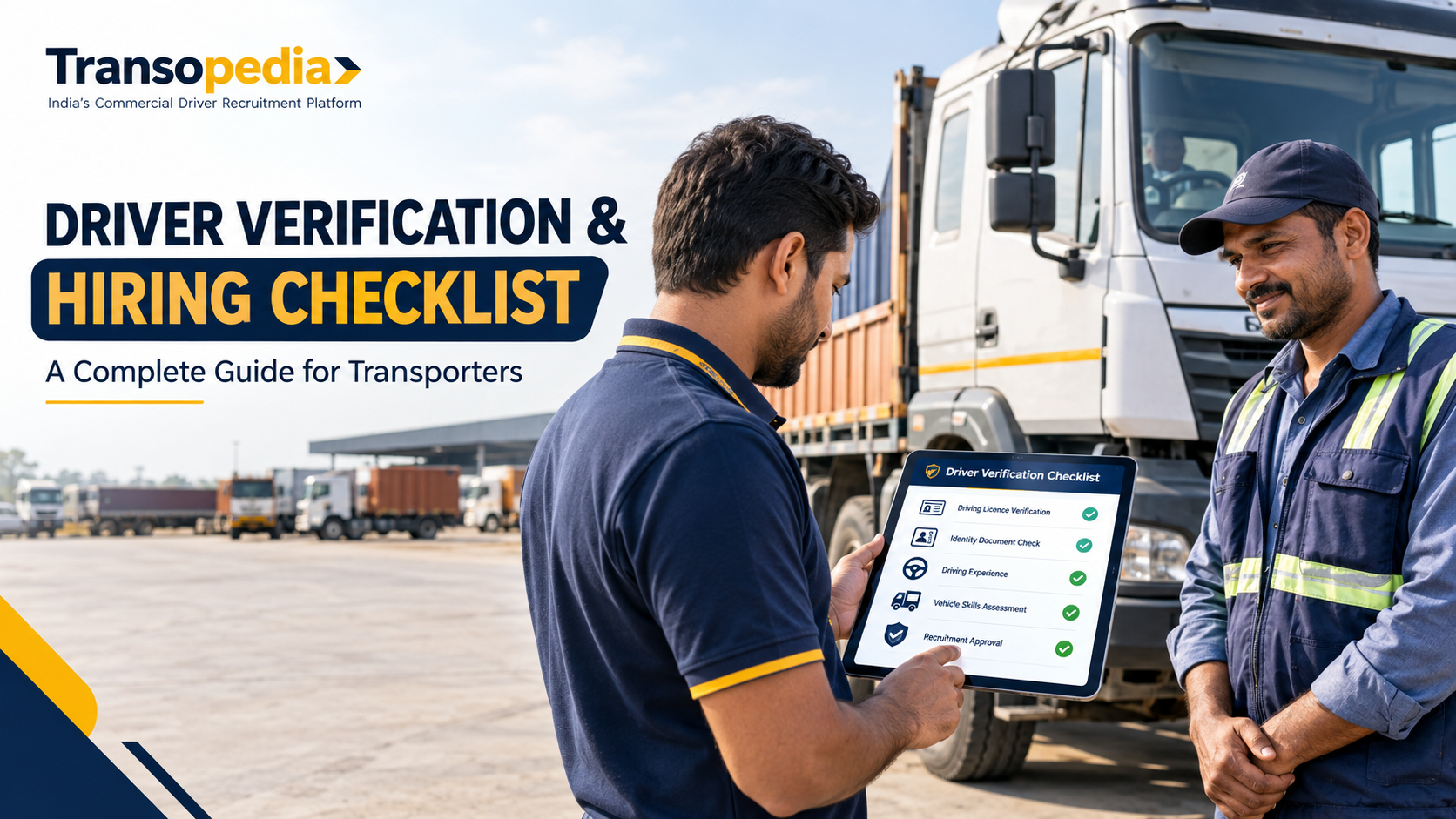
Driver Verification and Hiring Checklists: A Compl...
Hiring the right driver is essential for every transport business. Whether you operate t...
Read More →
The technology team behind Transopedia. We build websites, mobile apps, driver management systems, CRMs and more.
Visit sonpra.com
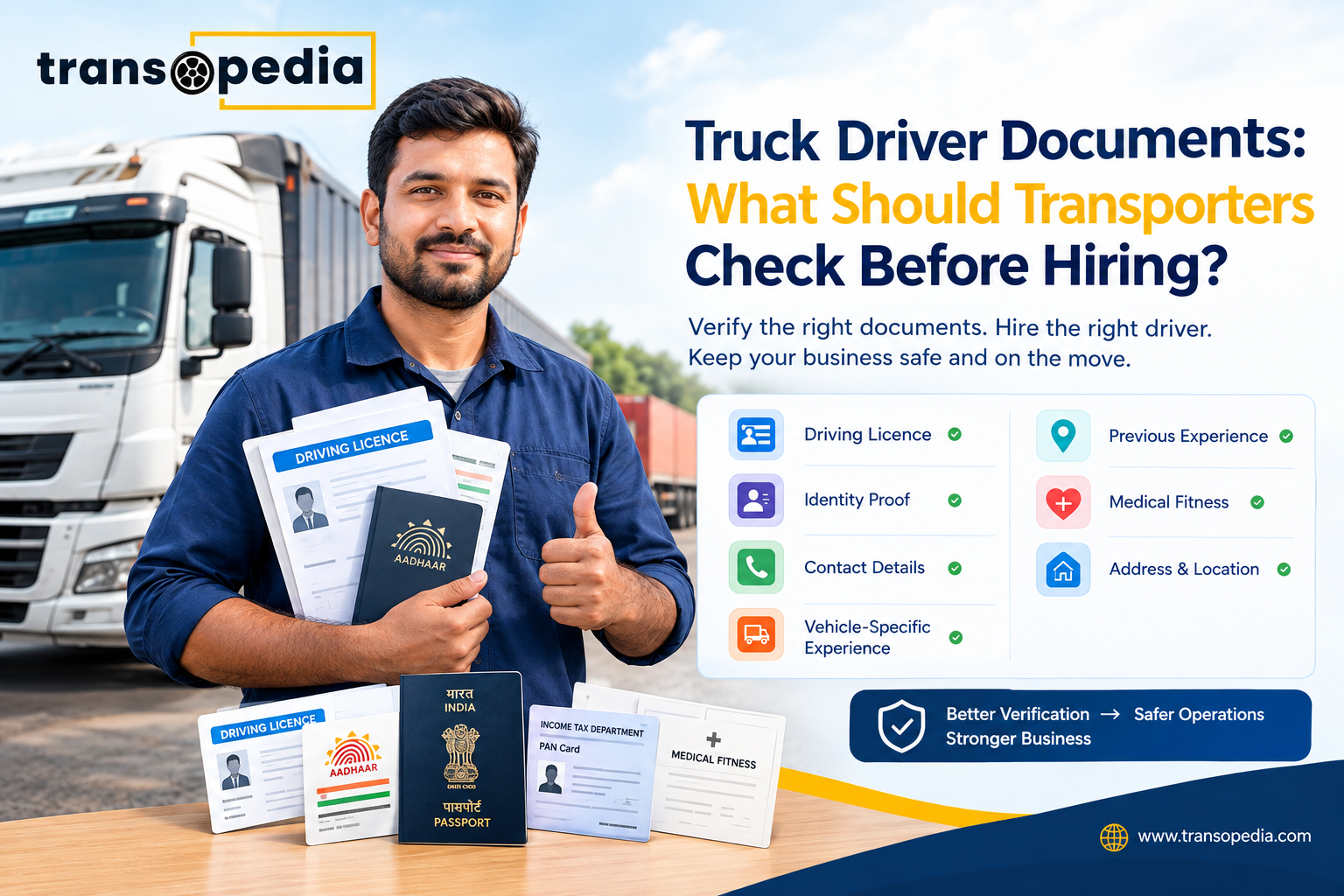
Truck driver Documents : Transporters, fleet owners, logistics companies, and businesses that depend on commercial vehicles. A driver is responsible not only for operating the truck but also for the safety of the vehicle, cargo, and people on the road.
Before hiring a driver, transporters should carefully check the truck driver documents, driving licence, experience, identity, and other relevant information. Proper document verification can help businesses avoid hiring problems and select drivers who are suitable for their vehicle and route.
In this guide, we will explain which documents transporters should check before hiring a truck driver, how to verify driver information, and how businesses can find verified truck drivers more efficiently.
A truck driver may have years of driving experience, but experience alone should not be the only consideration when hiring a driver.
By verifying the driver's documents helps transporters confirm important information such as:
For commercial transport, appropriate document verification is an important part of responsible driver hiring.
The driving licence is one of the critical documents to check before hiring a truck driver.
Transporters should verify:
The licence category should be suitable for the type of vehicle the driver will operate.
For example, a driver being hired for a heavy truck should have the appropriate authorization for that vehicle category.
Transporters should also verify the driver's identity using an appropriate government-issued identity document.
Depending on the hiring process, this may include documents such as:
The name and basic details should be consistent across the documents provided by the driver.
Identity verification can help businesses reduce the risk of incorrect or duplicate driver information.
A valid mobile number is another important part of driver verification.
Transporters should confirm:
The contact details should belong to the actual driver being considered for the job.
This becomes especially important when hiring drivers for long-distance or interstate transportation.
Documents are important, but transporters should also verify whether the driver's experience matches the vehicle they need to operate.
For example:
A driver may have experience driving a regular truck but may not have sufficient experience operating a:
Transporters should therefore ask about the driver's previous vehicle types and the number of years of experience with each category.
If you need a professional truck driver, you can explore Transopedia's truck driver hiring service to connect with suitable driver profiles.
Before hiring, ask the driver about their previous commercial driving experience.
Important questions include:
A driver's previous experience should match the requirements of your business.
For example, a transporter operating long-haul routes may prefer a driver with relevant highway and interstate driving experience.
Transporters should also confirm the driver's current city and basic address information.
Location can matter when businesses need:
Accurate location information can also make communication and onboarding easier.
Depending on the job, vehicle type, company requirements, and applicable rules, transporters may also need to consider the driver's fitness to perform commercial driving duties.
For demanding long-distance or heavy-vehicle jobs, businesses should ensure that the driver is fit and capable of safely performing the required work.
Any medical or fitness documentation should be handled according to applicable legal and employment requirements.
A valid driving licence does not automatically mean that a driver is suitable for every route.
Transporters should ask whether the driver has experience with:
Route familiarity can be particularly useful for businesses operating regular transportation routes.
Where appropriate, transporters can ask for previous employment details or professional references.
This can help businesses understand:
However, references should be treated as one part of the hiring process rather than the only verification method.
Document collection alone is not enough.
Transporters should also check whether the information provided by the driver is consistent and valid.
A basic verification process can include the following steps.
Ask the driver to provide the documents and information required for the position.
Compare the driver's name and identity information across the submitted documents.
Verify licence validity, category, expiry, and suitability for the vehicle.
Discuss the driver's previous vehicle types, routes, and commercial driving experience.
Verify the driver's mobile number and other contact details.
Discuss salary, route, joining date, work expectations, and other job conditions before finalizing the driver.
Driver verification is the process of checking a driver's identity, licence, contact information, experience, and other relevant details before the profile is made available for hiring.
Transopedia's verification process includes document submission, licence and identity checks, mobile verification, experience and skill screening, and ongoing quality monitoring.
Transporters can learn more about the process through How We Verify Truck Drivers.
The process includes checks such as:
This type of structured verification can help businesses make better-informed hiring decisions.
A valid licence is important, but it should not be the only thing checked.
Experience, identity, vehicle knowledge, and suitability should also be considered.
Always check whether the licence is currently valid.
A driver experienced with one vehicle type may not have the same experience with another specialized vehicle.
Transporters should not automatically assume that every submitted document or claim is accurate.
Relevant information should be checked before hiring.
A driver's years of experience and actual vehicle exposure should be discussed before assigning the vehicle.
Driver shortages can create urgency, but skipping important checks can create bigger operational problems later.
The latest information about transports and packers movers in India
10-10-2026
Hiring the right driver is essential for every transport business. Whether you operate t...
Read More →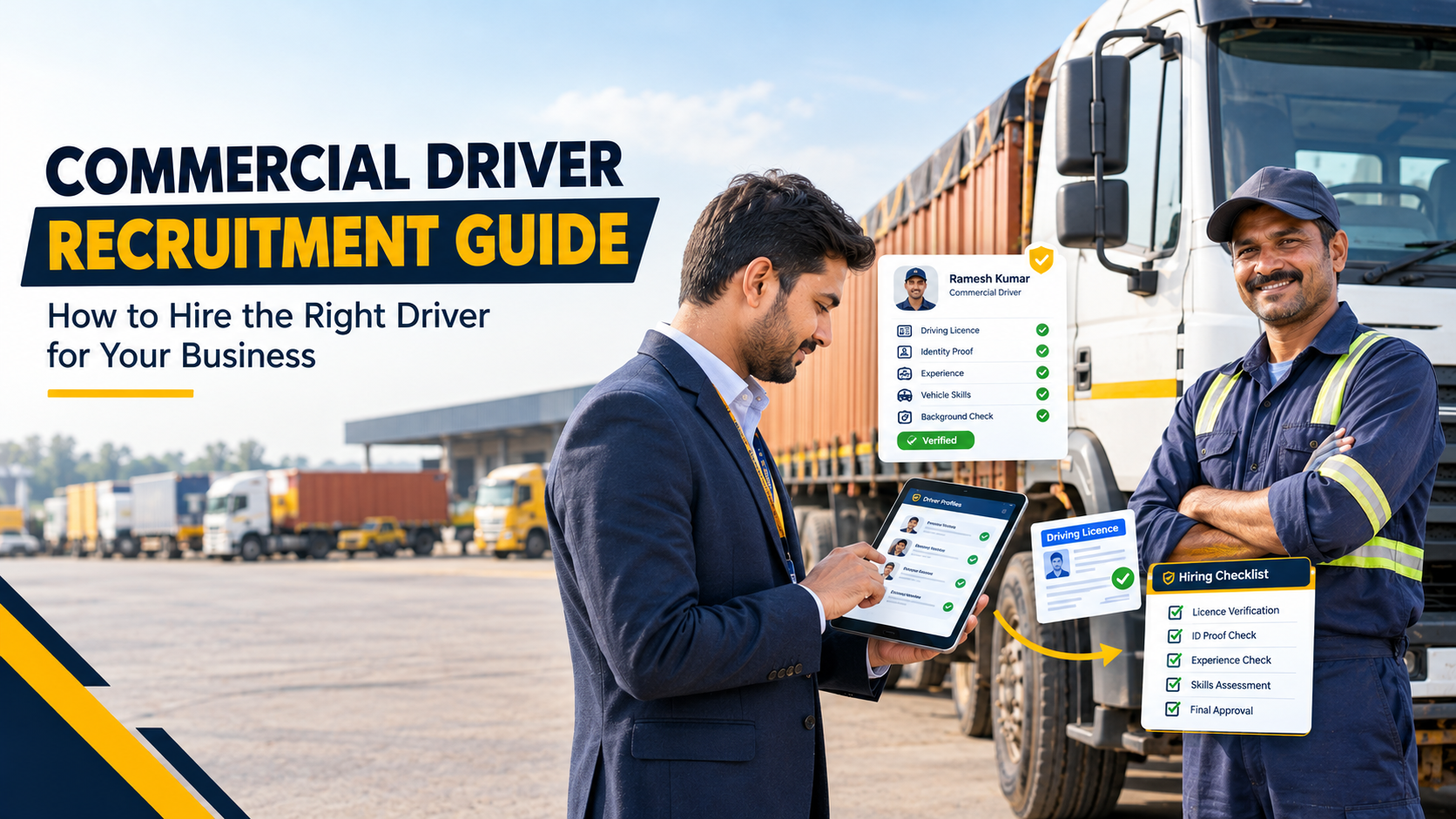 10-10-2026
Hiring a qualified commercial driver is an important decision for transporters, logistic...
Read More → 03-10-2026
For...
Read More →